

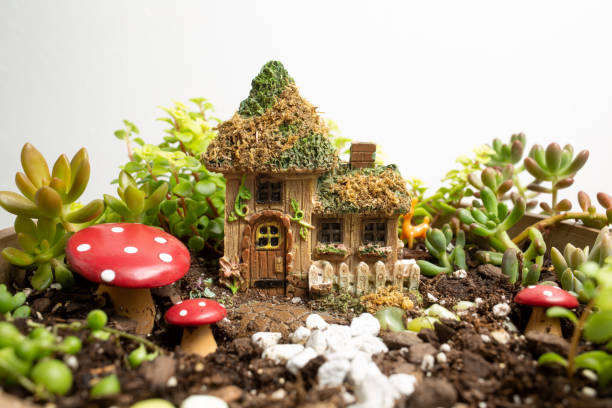

There’s something oddly delightful about building a world small enough to fit in a flowerpot. Fairy gardens offer just that—a chance to turn a quiet patch of the yard into a tiny, magical universe, full of charm and curiosity.
They don’t need to be big or complex. In fact, that’s the point.
A few well-placed miniature plants, a smattering of whimsical bits, and suddenly, you’ve got a scene that feels alive—whether it’s a tucked-away village or a secret trail beneath some mossy trees.
No need to break out the gardening gloves with reinforced fingertips. A little creativity and a free Saturday afternoon will get you halfway.
Scout Out Your Enchanted Nook
Let’s be honest. Even for fairies, location matters.
Start by finding a sunny little patch that gets at least four hours of direct sunlight. Most plants adore it. Flat ground helps, too. It stops things from tipping over every time you water them.
If the spot is visible from your kitchen or living room window, that’s a bonus. There’s something lovely about peeking out on a rainy day and catching a glimpse of your tiny world, just sitting there, undisturbed.
Try to avoid overly windy areas. Light decorations have a tendency to disappear if the breeze picks up. A sheltered ledge or a tucked-away nook makes a much better home.
Set the Stage (Literally)
Think of your container as the stage and your fairy garden as the play. The container can be anything with a bit of charm. For example, you could use an old tin basin, a cracked teapot, or a wooden drawer with weathered paint. The more character, the better.
Repurposed objects carry stories with them. That old soup pot? Maybe it once cooked winter stews. Now it’s home to thyme and moss.
Raised beds work well too, especially if you want to layer your design. Different heights make the whole space feel more immersive.
Planting directly into the ground gives you freedom with size and scale. However, using containers lets you move things around when the weather turns sour. Either way, don’t forget drainage holes.
No one likes soggy roots. Not even imaginary creatures!
If space is tight, cluster a few pots together. Stack them. Nestle them beside one another. Mix heights and textures to give it that ‘accidentally magical’ feeling.
Pick Small Plants That Pack a Punch
Think of your plant choices like casting characters in a story. Each one should add something unique.
Go for slow growers like moss, creeping thyme, sedum, and tiny ferns. These keep the scale in check and require less maintenance. Add a few pops of colour with violas, alyssum, or miniature daisies if you like.
Texture makes a big difference. Pair something fuzzy with something sharp, or have trailing vines spill over next to spiky greens. Likewise, variety keeps things intriguing, even in a space the size of a shoebox.
Moreover, climate matters, so take cues from your local weather. If it’s mostly dry where you live, succulents are your best bet. If your garden stays damp and shady, ferns and mosses will love it.
Group plants with similar needs so you’re not fussing over each one like it’s your favourite child. And always leave a little blank space. You never know what might want to move in later.
Adding herbs like mint or lavender isn’t just pretty, either. They smell amazing and draw butterflies or bees, which only adds to the enchantment.
Sprinkle in the Magic
Here’s where it all comes together. The stories start to bloom.
You don’t need to spend a fortune. A tiny chair made from twigs, a miniature house from a broken mug, and a stone path lined with beads from an old necklace. That’s all it takes.
Tuck little treasures into corners. Let the magic reveal itself slowly. A swing beneath a leaf. A window painted on a stone. Perhaps there’s a small broom resting against a pebble wall, anticipating someone’s arrival.
Update it with the seasons if you’re so inclined. Consider adding a splash of autumn leaves, a sprinkle of snow, or creating a summer picnic scene with bottle-cap plates.
Natural materials feel more authentic. Wood, stone, even shells. Plastic has its place, but it’s often a bit too polished for a garden meant to look timeless.
And don’t overcrowd it. Leave gaps. Let the viewer imagine what’s just beyond the moss. Often, the most magical detail is the one they never quite see.
A handwritten note saying, ‘Beware the Toadstool,’ or a tiny mail slot carved from bark can turn your display from cute to completely enchanting.
Weave in Paths and Play with Layers
What makes a garden feel like a real place is the sense of movement. That’s where paths come in.
Use crushed shells, fine gravel, or tiny bark chips to create winding trails. Curves always feel more inviting than straight lines. They hint that there’s something hidden just around the corner.
Add a focal point here and there.
A little archway, a gate that leads to nowhere in particular, or a marble tucked into a hollow, pretending to be a crystal pond. A tiny bridge, a tunnel of twigs, or a bent wire shaped into a ladder can spark all kinds of imagination.
Layer the ground, too. Even a shallow bump of soil makes it feel like there’s a hill to climb. The key is to suggest movement without saying anything outright.
If you’re feeling unsure about the layout, a local landscape gardener could help spark a few ideas. Most of the time, your instincts and a bit of playful rearranging will lead you somewhere lovely.
If you have a fondness for gadgets, consider incorporating solar-powered fairy lights or a dimly glowing pebble into your design. It doesn’t need to be flashy. Just a whisper of light can change the mood entirely once dusk falls.
Keep It Sweet with a Light Touch
This isn’t a space that needs rules. Yet, it does need care.
Water when the soil feels dry just beneath the top layer. It shouldn’t be watered according to a set schedule. Plants will tell you what they want, if you’re paying attention.
Trim anything that’s taking over. Watch for pests, mildew, or surprise weeds that elbow their way in. Gentle treatments are better here. After all, you’re maintaining a world, not just a pot of dirt.
In addition, take photos now and then. You’ll be surprised by how much it changes. Which plants thrive? Do curious hands or gusts of wind push certain parts around? Which corners suddenly catch the afternoon light just right?
Swap out decorations every now and again to keep the scene feeling fresh. You can rotate themes or just move things around. Even small changes breathe new life into the display.
If you’ve got kids, nieces, nephews, or even a curious neighbour, invite them to play. Let them add their treasure, rearrange a path, or invent the story of the garden’s invisible caretaker.
Conclusion
You’ll know it’s working when you catch yourself peeking at it for no real reason, half-expecting something to have shifted on its own. Maybe it has.
A fairy garden has this quiet, peculiar way of making your day feel softer around the edges. It doesn’t need much—a bit of curiosity, some dirt under your nails, and the freedom to build something simply because it makes you smile.
In a world that is constantly striving for bigger and louder, creating something small, curious, and completely unnecessary may be the most meaningful thing you do all week.