

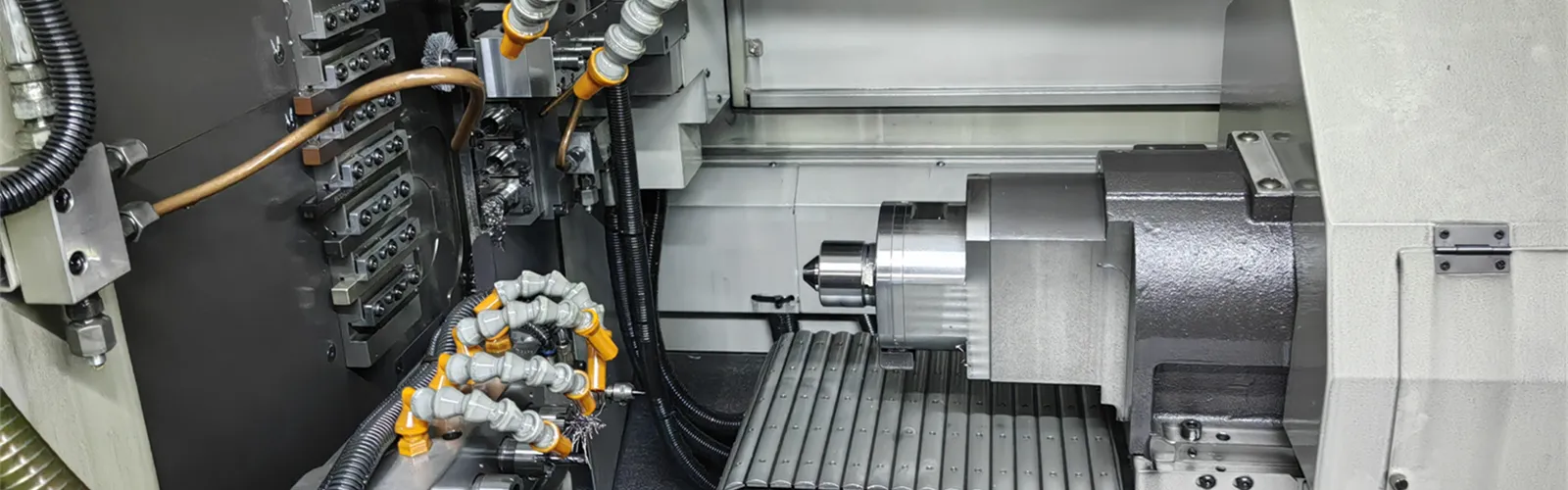

If you have ever listened to a CNC machine running a production cycle, you know it has a distinct voice. The hum of the spindle, the rhythm of the cutting tool engaging the material, the subtle shifts in pitch as the operation progresses—experienced machinists have always used their ears to detect problems before they become visible. A tool starting to dull, a workpiece beginning to vibrate, a coolant flow that has changed: these conditions announce themselves through sound long before they show up on a measurement report.
What was once an intuitive skill is now becoming a data-driven science. Acoustic monitoring, powered by advances in digital signal processing and machine learning, is emerging as one of the most promising frontiers in precision manufacturing. The same principles that allow a platform like AudioAlter to clean up a voice recording or balance a music track are being adapted to listen to factory floors—and what they are hearing is transforming how components are made.
The Voice of the Machine
Chatter vibration is one of the oldest problems in machining. When a cutting tool begins to vibrate against the workpiece, it leaves behind a poor surface finish, accelerates tool wear, and can even cause tool breakage. Detecting chatter early has traditionally required expensive vibration sensors mounted directly on the machine. But researchers have discovered that the acoustic signature of the cutting process—the sound the machine makes—contains the same information.
Recent studies have demonstrated that microphone data alone, processed through advanced signal analysis models, can identify dominant vibration modes during machining with remarkable accuracy. The cutting sound pressure tells a story about what is happening at the tool-workpiece interface—if you know how to listen.
The implications for manufacturing are significant. Acoustic monitoring requires no physical contact with the machine, no expensive retrofitting, and no disruption to production. A simple microphone array positioned near the cutting zone can continuously stream audio data to an analysis system that detects anomalies in real time. This is predictive maintenance without the wiring.
From Audio Editing to Quality Control
The parallels between audio processing and manufacturing quality control run deeper than one might expect. When a podcaster uses a noise reduction feature to remove background hiss, the system analyses the frequency spectrum of the recording, identifies unwanted components, and suppresses them while preserving the desired signal. The same logic applies to machining: the “desired signal” is a stable, chatter-free cut; the “noise” is vibration, tool wear, and process instability.
Researchers are now leveraging audio-based deep learning approaches to predict tool wear and detect defective materials in CNC turning operations using machining noise as the only input signal. The approach is non-contact, cost-effective, and scalable across factory floors. Separate studies have demonstrated a clear correlation between acoustic emissions and machining dynamics, enabling real-time machine state detection.
For manufacturers producing complex components—whether from aluminum, brass, copper, or stainless steel—this technology offers a path to higher consistency and lower scrap rates. Instead of relying on periodic quality checks that interrupt production, acoustic monitoring provides continuous, non-invasive insight into process health. A tool that is beginning to wear announces itself through a subtle change in pitch. A workpiece that is starting to vibrate produces a characteristic frequency pattern. The system flags these anomalies immediately, allowing operators to intervene before parts go out of specification.
The Growing Demand for Precision
These technological advances are arriving at a moment when demand for precision-machined components is accelerating across multiple industries. Electric vehicles require lightweight aluminum structures and high-conductivity copper components. Medical devices demand stainless steel and titanium parts with surface finishes measured in microinches. Aerospace components must maintain dimensional stability across extreme temperature ranges. Each of these applications pushes tolerances tighter and raises the cost of failure.
Manufacturers that have invested in advanced equipment, rigorous quality systems, and documented material processes are the ones best positioned to capture this growing demand. Shops that understand how different alloys behave under cutting forces—and can adjust their processes accordingly—deliver consistent results that transactional suppliers cannot match. For example, working with a specialist who understands the nuances of aluminum machining can make the difference between a component that meets spec and one that fails inspection.
The Swiss Machining Advantage
Among precision machining processes, Swiss-type turning occupies a unique position. Originally developed for watchmaking, Swiss machines support the workpiece immediately adjacent to the cutting tool through a guide bushing. This design eliminates deflection and vibration, making it possible to hold tolerances that conventional lathes cannot achieve consistently.
This capability has made Swiss machining the default choice for mission-critical components across medical, aerospace, and electronics industries. The combination of tight tolerances, excellent surface finishes, and the ability to produce complex geometries in a single setup has become essential for manufacturers who cannot afford variation. That is why many engineering teams turn to a provider of Swiss turning capabilities when their designs push the boundaries of what conventional machining can deliver.
From Raw Material to Finished Component
The journey from raw material to finished component involves more than just cutting metal. It requires careful material selection, documented process parameters, rigorous quality control, and often secondary operations such as heat treatment, surface finishing, or assembly. Each step must be controlled and verified to ensure that the final part meets its specifications.
For components that must perform reliably in demanding environments—whether a surgical implant, an aerospace fastener, or an EV battery connector—the quality of the machining process is not optional. It is the foundation of product performance and patient or passenger safety. Suppliers who have built their operations around these principles understand that precision is not just about holding tolerances; it is about maintaining process stability across every cycle, every batch, every shift. This is where a shop that produces high-quality turned parts demonstrates its value, delivering components that meet specifications consistently and reliably.
Listening to the Future
The integration of acoustic monitoring into precision machining is still in its early stages, but the trajectory is clear. As sensor costs decline and machine learning models become more sophisticated, the ability to “listen” to a production run in real time will become a standard capability rather than a research novelty. The factory floor of the future will be one where every machine has a voice, and that voice is continuously analysed for signs of trouble.
For companies sourcing precision components, this evolution has practical implications. Suppliers who embrace acoustic monitoring and other Industry 4.0 technologies are likely to deliver higher consistency, lower scrap rates, and fewer surprises. They are the ones who understand that precision is not just about holding tolerances—it is about maintaining process stability across every cycle, every batch, every shift.
The same audio processing principles that help a creator clean up a podcast or balance a music track are now helping manufacturers produce better components. Whether it is aluminum battery housings for electric vehicles, brass fittings for fluid systems, or stainless steel implants for medical devices, the sound of precision is becoming a critical input to quality. And the shops that know how to listen will be the ones leading the industry forward.