


Key Takeaways
- Start with real household habits before selecting patio materials, plants, or features.
- Plan shade, airflow, drainage, and durable surfaces early for better warm-weather comfort.
- Create connected zones for cooking, dining, relaxing, and flexible activity.
- Choose plants and irrigation approaches that suit the site’s sun, soil, and water conditions.
- Account for utilities, lighting, access, and approvals before construction begins.
Table of Contents
- Start With How the Backyard Will Be Used
- Map the Space Before Choosing Features
- Plan for North Texas Heat
- Build Clear Functional Zones
- Choose Materials for Outdoor Conditions
- Add Landscaping With Water Awareness
- Plan Utilities, Lighting, and Drainage Early
- Avoid Common Planning Mistakes
- Know When Professional Help Makes Sense
- Common Questions About Backyard Planning
- Conclusion
A successful North Texas backyard is designed around everyday routines, not a list of trendy add-ons. For homeowners comparing custom backyard landscaping services in Plano, TX, Garrett Outdoor Living is a Plano-based outdoor living company whose work centers on landscape construction, patios, outdoor kitchens, hardscaping, and 3D design planning for properties throughout the Dallas-Fort Worth area. That combination of design and construction services can be especially useful when a project needs to balance entertaining space, planting, drainage, and long-term upkeep.
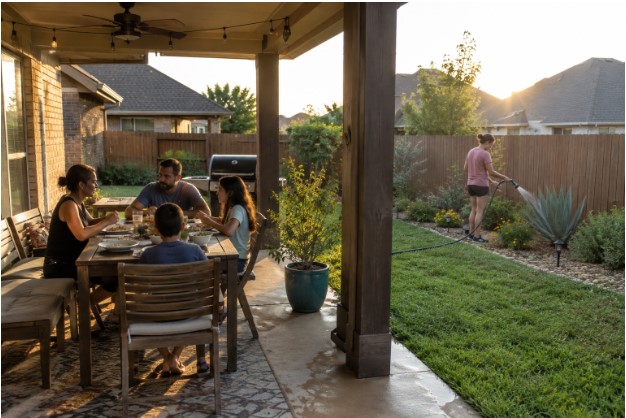
Whether the goal is a quieter spot for family dinners or a flexible setting for larger gatherings, the best plan starts with how people will actually move, cook, relax, and maintain the space. In Plano and across North Texas, afternoon sun, sudden rain, and long warm seasons should guide the layout as much as style does.
Start With How the Backyard Will Be Used
Begin by listing the activities the yard needs to support. A family that eats outside several evenings each week may benefit more from a shaded table near food prep space than from a large decorative focal point. Consider who uses the yard, including children, guests, pets, and older relatives. Then separate essential features from items that would simply be nice to have.
Map the Space Before Choosing Features
Measure the yard before deciding on a patio size or outdoor kitchen footprint. Mark property lines, doors, gates, existing trees, fences, slopes, utility locations, and natural walking paths. Observe where morning and late-day sun land, and note any spots where water collects after a storm. A simple sketch helps reveal conflicts before they become expensive changes.
- Measure usable areas, not just the full lot.
- Leave room to pull out chairs, carry food, and maintain planting beds.
- Identify routes from the indoor kitchen to the grill and dining space.
Plan for North Texas Heat
In Plano, a backyard can look inviting in the morning and feel difficult to use by late afternoon if shade is ignored. Covered patios, pergolas, trees, and open-sided structures can make seating areas more usable while preserving airflow. Position dining and lounge areas with the strongest sun angles in mind, especially where people will gather after work.
Plant care matters too. Guidance on Texas summer landscape care emphasizes watching plants for stress, watering thoughtfully, and selecting plants suited to demanding summer conditions. Place heat-sensitive plantings where structures or trees can provide appropriate afternoon protection.
Build Clear Functional Zones
Cooking and Dining Zones
Keep the grill, counter space, storage, and serving area close enough to work efficiently, but away from narrow circulation paths. A dining table should sit near the cooking area without forcing guests to walk through the cook’s workspace. Consider smoke direction, access to the house, and enough clearance for chairs.
Relaxation and Activity Zones
Place comfortable seating where it can benefit from shade, lighting, and a pleasant view. Set it far enough from the grill to reduce smoke and noise. If the household needs room for games, pets, or children, reserve an open area instead of filling every part of the yard with permanent features.
Choose Materials for Outdoor Conditions
Material decisions should account for direct sun, rain, stains, cleaning, and repairability. Concrete, pavers, natural stone, composite decking, weather-rated cabinetry, and outdoor-rated countertops each have different maintenance needs. The right choice depends on exposure, budget, the desired appearance, and how much upkeep the household is willing to handle.
- Check how hot a surface may feel in direct afternoon sun.
- Choose finishes that can tolerate food spills, pollen, and regular cleaning.
- Ask whether a damaged section can be repaired without replacing the whole surface.
Add Landscaping With Water Awareness
Landscaping can provide privacy, soften hardscape, frame views, and define separate outdoor rooms. Use trees, taller shrubs, or planting beds to create visual separation while keeping sidewalks, appliance access, and foundations clear. Grouping plants with similar watering needs can make irrigation decisions easier.
For plant selection, the Texas SmartScape plant-planning resource can help homeowners explore native and adapted choices suited to Texas heat and water-conscious landscapes. Mulch can also help protect soil moisture and suppress weeds when it is applied thoughtfully around, rather than piled against, plant trunks.
Plan Utilities, Lighting, and Drainage Early
Hidden infrastructure often determines whether an outdoor project stays straightforward. Plan outlets for cooking, seating, entertainment, and maintenance. Consider gas, water, drainage, and low-voltage lighting before hardscape is installed. Layered lighting can improve visibility at steps, pathways, cooking surfaces, and dining areas without making the yard feel overly bright. Runoff should be directed away from the home, patio, foundation, and neighboring properties.
Avoid Common Planning Mistakes
- Building a patio that is too small for furniture and circulation.
- Placing a grill where smoke drifts toward doors or seating.
- Ignoring the late-day sun until after construction.
- Selecting plants for appearance without considering site conditions.
- Forgetting storage for cushions, tools, toys, and outdoor dishes.
- Waiting to plan electrical, gas, water, or drainage lines.
Know When Professional Help Makes Sense
Professional design-build input can be valuable when a project combines grading, retaining walls, patios, structures, outdoor kitchens, lighting, and planting plans. It can also help when HOA requirements, permits, drainage concerns, or challenging access affect the design. Before hiring, ask about material options, schedules, warranties, change-order processes, drainage planning, and examples of completed work.
Common Questions About Backyard Planning
What should be planned first?
Start with intended use, then evaluate the site, access, sun exposure, drainage, budget, and utilities.
Is a covered patio worthwhile in North Texas?
A covered area can improve comfort during hot or rainy periods, but its value depends on placement, airflow, size, and how often the household will use it.
How can a backyard use less water?
Select plants suited to local conditions, group them by watering needs, use mulch, and check soil and weather before irrigating on a fixed schedule.
Conclusion
A backyard works best when each feature supports a real activity. By planning around daily routines, North Texas heat, connected zones, practical materials, and sound drainage, homeowners can create an outdoor space that is useful for ordinary weeknights as well as weekend guests.