

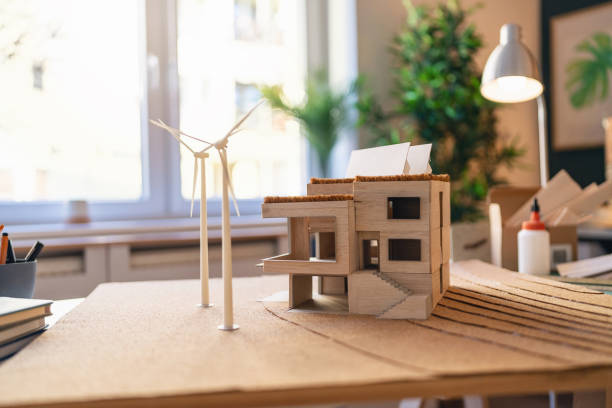

More Than a Hobbyist’s Pastime
Mention miniature models to most people and they’ll picture a hobbyist’s train set or a diorama on a shelf. That association isn’t wrong, exactly, but it undersells how widely miniature models are actually used in professional settings — education, museums, product marketing, and exhibition displays all rely on this same craft, just applied to very different purposes than a weekend hobby project.
A professional miniature model making company typically works across several of these categories at once, and the skills that go into a beautifully detailed hobby diorama translate directly into building a museum exhibit piece or a product display model for a trade show. The scale might be different, and the client’s expectations certainly are, but the underlying craftsmanship — precision cutting, careful painting, attention to proportion — is the same discipline either way.
Education and Museum Applications
Museums and educational institutions have quietly remained one of the steadiest markets for high-quality miniature work. A historical battlefield laid out in miniature, a cross-section model of the human body, or a scaled recreation of an ancient city gives students and visitors a way to understand spatial relationships that a flat illustration or a screen simply can’t replicate in the same way.
These projects often demand a level of research most people wouldn’t associate with model building — historical accuracy for period pieces, anatomical correctness for scientific models, or geological detail for topographic displays. A workshop that handles this kind of work needs to collaborate closely with subject matter experts, not just work from a simple brief, since accuracy matters as much as visual appeal for an educational piece.
Interactive elements are increasingly common in this space too — models with lift-off panels, cross-sections that reveal internal structure, or components that visitors can move to understand how something works. Building these features into a miniature model adds a mechanical design layer on top of the usual craftsmanship, since anything handled repeatedly by museum visitors needs to hold up to far more wear than a display piece behind glass.
Product Display and Marketing Uses
On the commercial side, miniature models serve a very different but equally practical purpose — giving customers a tangible sense of a product’s scale, features, or packaging before it’s available to hold in their hands. This shows up in trade show booths, retail displays, and marketing campaigns where a scaled replica draws more attention and holds it longer than a printed image or video loop ever manages to.
A well-built product miniature has to balance accuracy with visual appeal in a way that’s slightly different from architectural or industrial work. It needs to look instantly recognizable as the product it represents, often at a glance from several feet away in a crowded exhibition hall, while still holding up to closer inspection from an interested customer who picks it up or leans in for a better look.
This is a category where a reliable miniature model making company earns repeat business quickly, since brands often need multiple units for different retail locations or events, and consistency across those units matters just as much as the quality of any single piece.
What to Expect When Commissioning One
Whether the purpose is educational, commercial, or purely decorative, the commissioning process looks broadly similar to other kinds of scale model work — a clear brief, agreed scale and materials, staged production with client check-ins, and a finishing process that accounts for how and where the piece will actually be displayed or handled.
One detail that’s easy to overlook is durability planning. A miniature destined for a glass display case has very different requirements than one meant to travel to trade shows every few months or be handled by museum visitors daily. Discussing this upfront with the workshop affects material choices, protective coatings, and how robust the internal structure needs to be, and it’s worth raising early rather than after the piece arrives and turns out to be more delicate than the use case actually requires.
Matching the Model to Its Real Purpose
Across every one of these applications — educational, commercial, or purely decorative — the common thread is that the best results come from being specific about purpose from the very beginning of the conversation with the workshop. A vague brief tends to produce a generically competent model, while a clear, detailed purpose tends to produce something genuinely well suited to the job it needs to do.
For anyone weighing options, it’s worth spending a little extra time upfront describing exactly how and where the piece will be used, since a good miniature model making company will use that information to make smarter decisions about materials, durability, and detail level than they could working from dimensions and a vague description alone.
Budget Expectations Across Different Project Types
Pricing for miniature work varies enormously depending on purpose and detail level, which sometimes surprises clients comparing quotes across different use cases. A simple product display piece for a single trade show might cost considerably less than a museum-grade educational model requiring historical research and interactive components, even if the two pieces look similar in size at first glance.
Getting a clear, itemized quote that explains what’s driving the cost — research time, material choices, interactive mechanisms, finishing detail — helps clients understand exactly what they’re paying for, rather than simply comparing bottom-line numbers across workshops that may be quoting for very different levels of underlying complexity.
This kind of transparency is worth prioritizing when comparing studios, since a lower quote that turns out to have quietly assumed a much simpler build than what you actually need often ends up costing more in revisions and disappointment than a higher, more honest quote would have from the start.
A Craft With Room for Genuine Creativity
It’s worth remembering that miniature work, unlike some other categories of scale modeling, often leaves more room for genuine artistic interpretation, particularly on the diorama and display side of the business. A maker’s personal style — how they handle foliage, weathering, or lighting choices — can shine through in a way that’s less common in strictly technical architectural or industrial builds.
Clients open to a bit of that creative input, rather than insisting on rigid control over every visual choice, often end up with a more distinctive and memorable finished piece, since the maker’s own eye for detail and composition gets to contribute something beyond simply executing a brief to the letter.