


If you’re planning a project that involves temporary works, heavy construction equipment, or foundation installation in Bristol, you’ll need a clear picture of your site’s ground bearing capacity. That’s where plate load testing becomes essential. It gives you reliable, on-site data about how your site will respond to a given load—helping you design safely and avoid costly errors.
This guide walks you through the plate load testing service, from the basics to how to apply the test results in your project.
What Is Plate Load Testing?
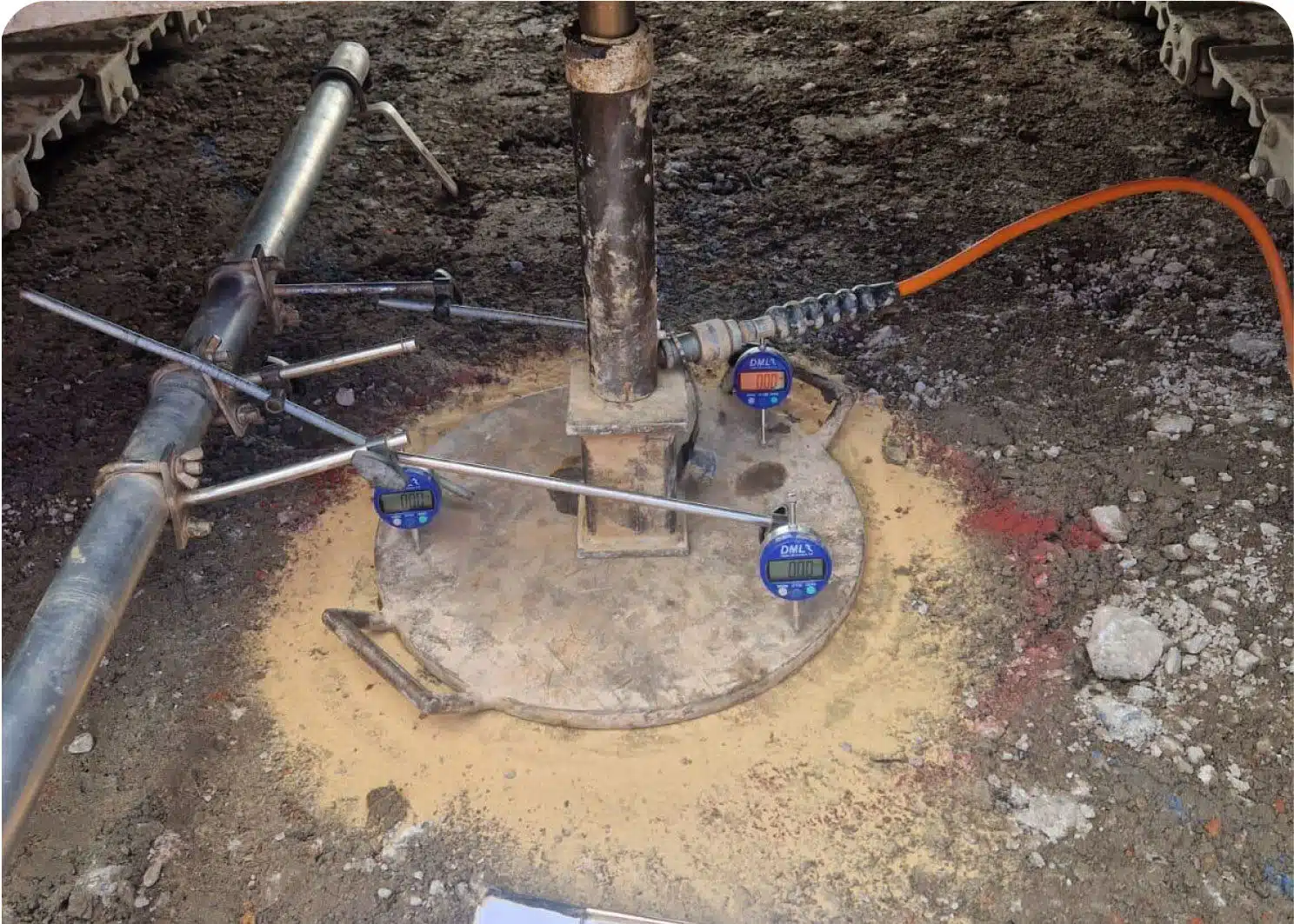
Plate load testing, also known as the plate bearing test, is an in situ test used to determine the ultimate bearing capacity and settlement characteristics of the ground. It involves applying force to a circular steel plate using a hydraulic jack and measuring how much the plate sinks into the soil.
This helps you assess the bearing pressure, soil strength, and subgrade reaction—all crucial factors in foundation design, platform construction, and pavement construction.
Why It’s Crucial for Civil Engineering in Bristol
Bristol’s ground conditions vary widely. You may encounter anything from dense gravels to soft clays or granular layers. A piling rig might be needed on one end of your site, while the other can take footings directly.
With proper plate load testing, you get real-world data based on actual site conditions, not assumptions. It supports safe design and compliance with civil engineering standards. It’s particularly helpful when designing working platforms, crane pads, piling mats, or supporting tracked plant on variable soils.
How the Plate Bearing Test Works
Here’s how a typical plate load test is carried out on-site:
- A shallow pit is excavated and levelled to create a stable surface.
- A steel plate—usually 300–750mm in plate diameter—is placed on the ground.
- A reaction load (often a vehicle or counterweight) provides resistance.
- Pressure is applied using a hydraulic jack in equal increments.
- Dial gauges or sensors track how far the plate settles under each load increment.
The test continues until the reaction load required is achieved or the soil behaviour becomes unsuitable. The resulting data includes a load-settlement curve, strain modulus, and bearing capacity—all of which help guide design parameters.
When to Use Plate Load Testing
You should consider plate load testing for:
- Working platform construction and validation
- Supporting piling rigs and crane pads
- Designing temporary works and access routes
- Installing foundations in shallow soils
- Verifying the strength of granular layers or subbase layers
- Assessing road construction and pavement bases
- Validating or comparing results from a CBR test or lightweight deflectometer
It’s especially useful when rapid, surface-level load testing is needed and you want to avoid over-engineering.
Common Pitfalls and How to Avoid Them
To get reliable results, avoid these common mistakes:
- Using the wrong plate size or incorrect diameter plates
- Failing to level the surface of the shallow pit before testing
- Applying an uneven or insufficient reaction load
- Rushing through load increments without allowing time for settlement
- Ignoring changes in site conditions or failing to factor in the water table
A careful approach ensures the data will genuinely provide value and lead to informed decision making.
Plate Load Testing vs. Other Methods
- CBR Test (California Bearing Ratio) – Common for roads, but can underestimate strength on stiffer soils.
- Lightweight Deflectometer – Quicker but offers less detail on settlement characteristics and bearing pressure.
- Plate load testing – Best for projects involving surface loads, platforms, and foundation design where safe bearing capacity is critical.
If you’re working on soils for civil engineering applications like piling, road subgrades, or crane platforms, plate load testing gives the most robust data.
Practical Example: Platform Design on Soft Ground
On a project near Bristol Harbourside, a developer needed to place heavy construction equipment on soft, reclaimed land. A plate load test revealed insufficient capacity of the ground for direct loading. Engineers used the test results to redesign the working platform, incorporating geogrid and compacted stone. This avoided overuse of concrete, reducing costs and delivering a safer, more cost-effective outcome.
What to Do with the Test Results
Once you’ve completed the site testing, don’t just file the report away. Use it to:
- Verify or adjust design parameters
- Check suitability for temporary works or permanent structures
- Confirm safe bearing capacity for platforms and foundations
- Support construction sign-off and quality control procedures
The results support practical civil engineering purposes and protect against structural failure—especially in variable soil types.
Quick Checklist: Do You Need a Plate Load Test?
- Unsure of the capacity of the ground
- Designing working platforms or piling mats
- Using a piling rig or crane pads
- Mixed or reclaimed ground with unknown properties
- Need data for platform construction, not just roads
- Seeking high total value from on-site decisions
How Long Does It Take? What Does It Cost?
A typical plate bearing test takes half a day per location. You’ll usually have the test results shortly after. In terms of cost, it’s a small investment when you consider the potential savings from avoiding structural failure or unnecessary reinforcement.
FAQs: Plate Load Testing
How deep does a plate load test go?
It measures surface-level strength, typically to the depth of the plate diameter (about 300–750mm). It’s not suited for deep foundations.
Can one test cover the whole site?
Not always. If your site has varied soil conditions, you’ll need multiple test points to get an accurate picture.
Can it replace a CBR test?
Not entirely. Plate load testing gives more accurate data on bearing pressure and settlement, but you may still need a CBR test for subgrade design or compliance.
What if the water table is high?
The water table can affect soil strength and test accuracy. It should always be recorded and considered during analysis.